
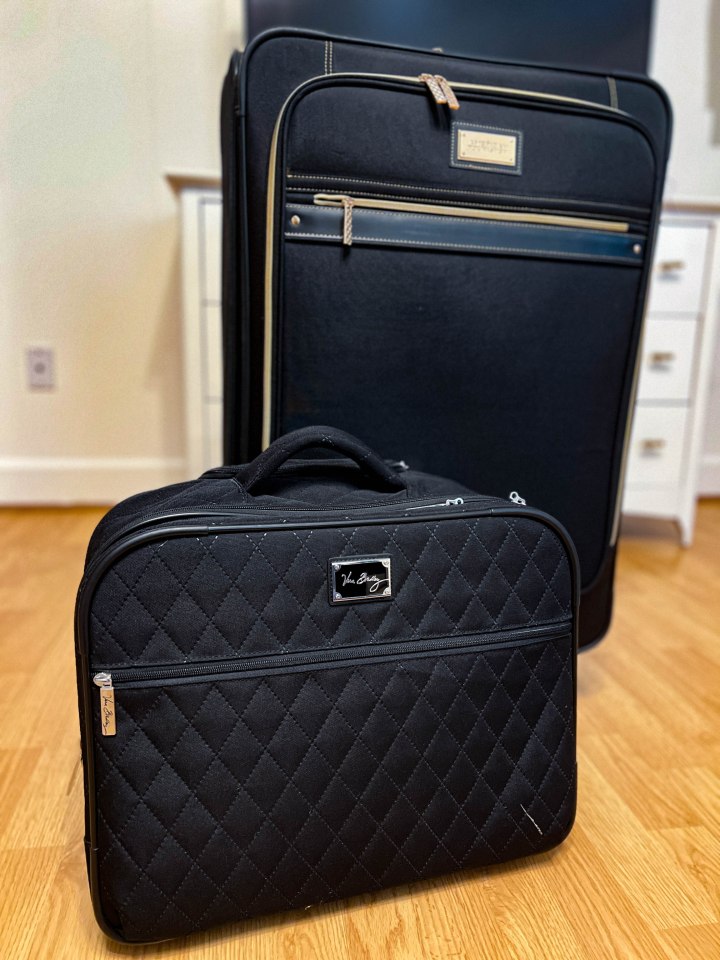
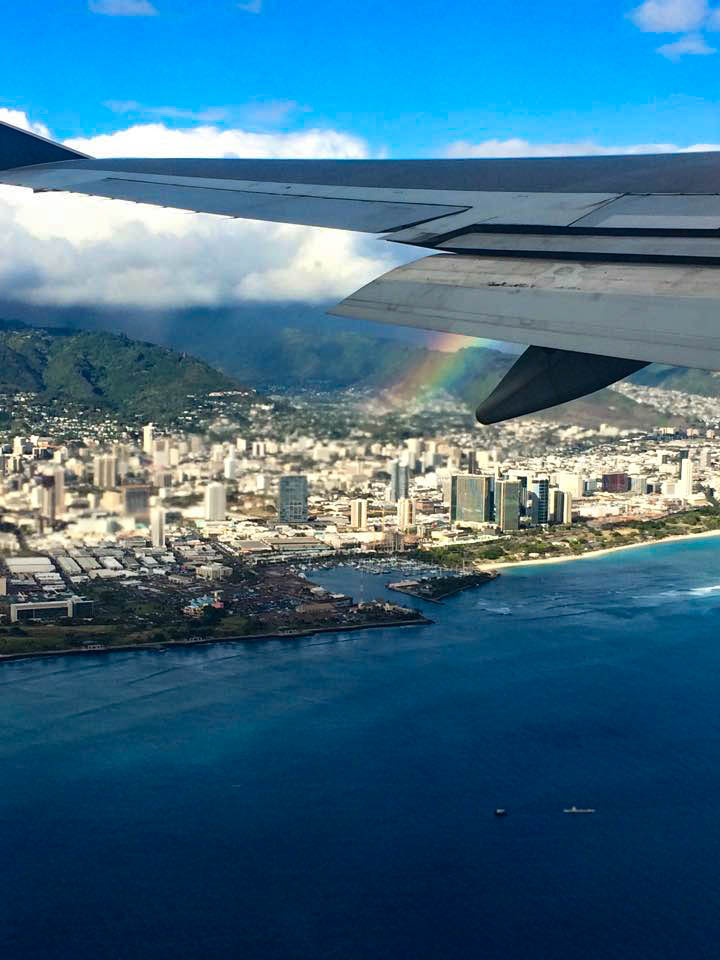
How Are You Getting There?
Your mode of transportation can have a big impact on luggage. Are you flying? Traveling by car or train or bus? Or some combination of those?
We’ll start with travel by plane. There are benefits to having both carry-on only and checked luggage, so we’ll cover the big ones.
Plane – Carry-On
One of the main benefits to carry-on only is that you won’t have to pay to check your bag. Some airlines (like Southwest) do allow you 1-2 free checked bags, but most airlines do not. You can expect a fee of at least $30 per checked bag.
If you tend to fly coach, or you go for the discounted tickets like we do, you’ll be last to board the plane and may be asked to check your bag at the gate. We’ve had to check ours at the gate several times when we’ve been on full flights. You won’t have to pay, but you will still have to visit baggage claim with everyone else to pick it up. This is why it is important to put a luggage tag on your carry-on bags as well. However, assuming you don’t have to check your bag at the gate, you’ll not only save money but also time in not having to go wait for your bag. Most airlines do their best to get bags on the conveyor belt as soon as possible, but sometimes you still might have a to wait a bit for yours to pop up.
On a related note, carry-on only can also help ensure your bags are not lost. We’ve never had an airline lose our bags before (knock on wood), but we know it happens all the time. Even if you have to check your bag at the gate, it is much less likely it will be lost than bags checked in at the counters.
You also need to keep in mind all of the restrictions for carry-on only luggage. Most notably, you are only permitted to have liquids under 3.4oz and all liquids must fit into a quart sized bag. If you have a lot of liquid products you like to travel with, carry-on may be too restrictive for you. There are also other items you can’t have in your carry-on, such as certain blades, tools, and sporting equipment.
Plane- Checked
The biggest benefit to checking a bag is you have more space. We have flown carry-on only a couple of times and it can be a challenge getting everything to fit on the way back (especially if you shop like we do). You also have a little more freedom in what you bring. Most of us probably aren’t going to be traveling with weapons or cricket bats, but being able to carry more dry shampoo and skin products is a definite bonus for a lot of people. However, there are also items that are not permitted in checked luggage but are allowed in carry-on bags such as cigarette lighters and some lithium batteries.
For a full list of what is and is not allowed in your bags, visit the TSA website. You can also search for specific items you have questions about.
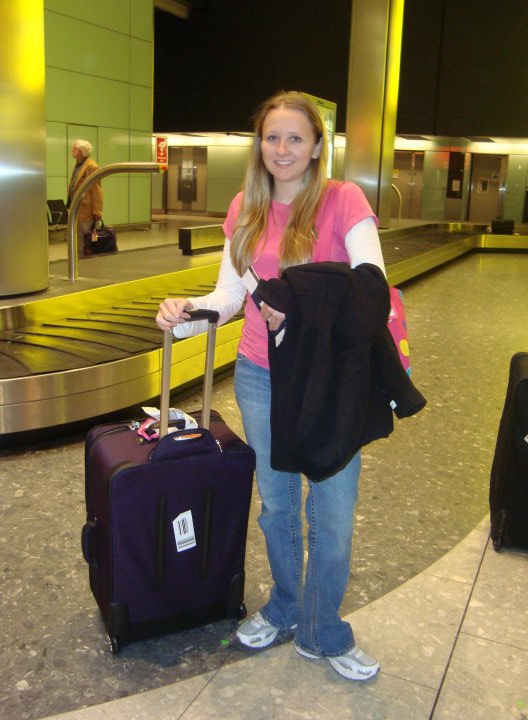
Trains, Buses and Cars
Size of luggage is also important when you are taking a train, bus, or car. Similar to planes, oftentimes trains and buses will have restrictions on what you can and cannot bring. We took an Amtrak train in 2019 from Philadelphia to Washington DC and their policies on the size of luggage allowed was similar to a flight. You were permitted two carry-on bags and then you could check up to four. Some items are prohibited either in checked, carry-on or both.
Buses also usually have a per person bag limit and their own restrictions. Greyhound, for example, allows one free checked bag (under 50 lbs) and then charges for additional luggage.
When you rent a car, or drive your own, you have a little bit more freedom in what you bring. But remember, a car has limited space. And even if you have a luggage rack on top, that space isn’t unlimited either. More than likely, you are not traveling alone and don’t want to cram so much stuff in the car that the passengers are cramped and uncomfortable.
Regardless of what is allowed, you have to keep in mind that, most likely, you are the one who has to transport your luggage to and from all of these modes of transportation. For almost any trip, we would recommended never taking more than one checked bag and one carry-on per person (not including personal items like purses and laptop bags).
What Are You Going to Be Doing When You Get There?
What you pack is also determined by the purpose of your trip. Will you be relaxing on the beach or hiking a glacier? Determining what all you will need for the activities you have planned will give you an idea of how much space you need to pack everything.
 Our McTravels
One thought on “Which Luggage Size is Right For You?”